




In today’s fast-moving automotive manufacturing and aftermarket world, the question of whether upgrading a car speaker system is truly beneficial remains highly relevant. For manufacturers, system integrators and service providers working in mechanical and production environments, understanding the technical, acoustic and installation implications of a speaker upgrade can yield tangible value. In this article we’ll examine how a car speaker functions, what distinguishes high-performance units, how these devices integrate into a vehicle’s audio ecosystem, and why for many machine-builders or audio-equipment suppliers the upgrade path is more than just marketing—it’s about delivering engineered value.
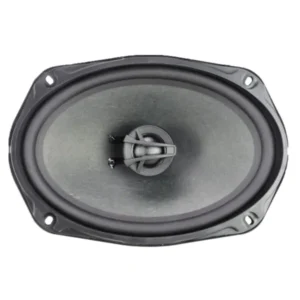
1. Introduction: why the car speaker deserves deeper attention
Factory-installed audio systems are often engineered for cost, space and convenience rather than premium sound reproduction. As one buying guide states: “Upgrading your car speakers is one of the best ways to improve your daily commute.” For an OEM, a component supplier or a retrofit service provider, the speaker is the interface between electrical signal and acoustic output, and small improvements in speaker quality or installation can yield disproportionately large perceptual improvements. In effect, focusing on the car speaker should not be viewed as “just audio”, but rather as part of a mechanical-acoustic system that has measurable performance metrics.
2. How a car speaker works: the mechanical underpinnings
At its core, a speaker behaves like an air-piston: when you send an alternating current through its voice coil, that mechanical system moves the cone forward and inward, modulating pressure waves in the car’s cabin.From a mechanical manufacturing standpoint, you can break down the speaker into a “motor” section (the magnet/voice coil), a “suspension” system (surround, spider) and a cone or diaphragm that displaces air. Choices of materials, tolerances of manufacturing and mounting architecture all impact performance.
In a vehicle environment the acoustic load is complex: the interior volume, door panels, resonances, reflections and mounting depth all influence how the speaker will behave. A well-engineered car speaker will account for those constraints, and integration becomes more than “just plug and play”. The manufacturer or installer that pays attention to mechanical fit, mounting stability and vibration control will deliver better real-world sound quality.
3. Key characteristics of a high-performance car speaker
When evaluating or manufacturing a speaker intended for automotive use, several specifications stand out. According to recent resources, the critical metrics include: power handling, sensitivity, frequency response and impedance.
-
Power handling: This is how much continuous (RMS) and peak power the speaker can safely handle. Mismatching power handling with amplifier output or head unit capability leads to distortion or damage.
-
Sensitivity: Measured in decibels, this indicates how efficiently the speaker converts power into sound. Higher sensitivity means louder output for a given input—important when the vehicle’s audio system has limited amplification.
-
Frequency response: A wide and flat response means the speaker can reproduce a broader range of sound with more fidelity. Combined with appropriate enclosure or mounting, this improves clarity.
-
Impedance: Usually in ohms. The speaker’s impedance must match or be compatible with the amplifier or head unit output, otherwise efficiency drops or current draw issues occur.
From a manufacturing or mechanical services perspective (e.g., thermoforming frames, precision molds, speaker mounting assemblies), it is worth noting that build quality—brackets, housings, dampers—directly affects vibration behaviour, sound clarity and longevity.
4. Types of car speaker systems and their mechanical implications
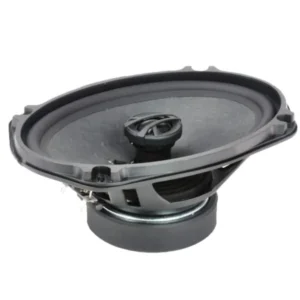
Understanding the different configurations of car speakers is essential, especially if your business deals with manufacturing, assembly or system integration. The main types are:
Coaxial (Full-range) speakers
Often referred to as full-range or coaxial, these units place a woofer (low/mid frequencies) and a tweeter (high frequencies) on the same axis in a single housing.The advantage: ease of installation and compatibility with factory speaker positions. The trade-off: the combined driver can lead to compromises in acoustic performance due to interference between drivers and constrained mounting geometry.
Component speaker systems
These separate the tweeter and woofer physically and introduce a crossover network.For mechanical design or manufacturing partners, this means additional mounting brackets, precise positioning (tweeters often mounted higher in vehicle cabin), stronger cascaded tolerance control, and potentially vibration isolation or enclosure design. While more complex, component systems deliver higher fidelity and spatial soundstage.
Subwoofers & dedicated low-frequency drivers
Though technically still part of the broader “speaker” category, subwoofers focus on the low end (e.g., 20 Hz–300 Hz).For machine-builders working with plastic molds or enclosures, ensuring correct enclosure volume, port design (sealed vs vented) and structural rigidity is critical. Poor design will result in distortion, panel vibrations or audible rattles.
5. Integrating a car speaker into the vehicle: manufacturing and service considerations
For companies involved in manufacturing or installing automotive audio systems, the integration of a speaker is not simply selecting a driver—it is an engineered process:
-
Fit & Mounting: Speaker aperture size, mounting depth, bezel width, gasketting, vibration isolation—all affect performance. Buying guides emphasise the relevance of fit when replacing factory units.
-
Cabin acoustics: The vehicle cabin is not an ideal acoustic space; reflections, structural resonance, door-panel flex, and material damping all influence how the speaker performs. In manufacturing, adding vibration-damping materials, reinforcing panels, or designing speaker housings/molds that reduce resonances yields better results.
-
Power chain compatibility: The speaker must match the head unit/amplifier’s output. From a service provider viewpoint, advising clients on system matching (speaker impedance, sensitivity relative to amplifier output) reduces returns and improves satisfaction.
-
Ear calibration and system tuning: The best speaker in the world still needs proper tuning (crossover setup, equalisation, time alignment) to shine. For a manufacturing partner offering installation services, bundling calibration as part of the service can differentiate your offering.
-
Durability and environment: Automotive applications are harsh—temperature swings, humidity, vibration, and other stress impact speakers differently than home installations. A speaker designed with sturdier materials, proper bonding, and mounting resilience is beneficial for long-term performance.
6. Why an upgrade to the car speaker makes sense in business and engineering contexts
From the manufacturer’s or mechanical service provider’s viewpoint, why focus on upgrading car speakers? Several reasons:
-
Performance differentiation: In a market where vehicles are increasingly commoditised, an improved sound system offers perceptual value. If you provide manufacture or integration of speaker modules, highlighting precision-molded frames, vibration isolation inserts or specially tuned custom housings gives you a competitive edge.
-
Improved user experience: Good sound doesn’t just impress—it reduces driver fatigue, improves clarity of voice calls, and enhances overall vehicle satisfaction. This adds substantive value to the end product, which can support premium pricing or customer satisfaction metrics.
-
Extended product lifecycle: Replacing factory speakers or upgrading retrofits extends the life and relevance of older vehicles. For service providers, offering speaker upgrade kits engages the aftermarket channel.
-
Manufacturing synergies: For a business capable of producing plastic/rubber parts, moulded speaker baskets, cones or housings, leveraging that capability into the automotive audio segment opens up a value-added manufacturing line. Because the speaker is a mechanical system (cone, surround, basket, magnet housing), your manufacturing services align well with speaker production.
-
Brand reputation and certification alignment: If your manufacturing process supports certifications like ISO9001, then delivering speaker assemblies that emphasise tight tolerances, material traceability and long-term reliability aligns with engineering-driven markets. Clients who are mechanical-system integrators will appreciate that your service integrates quality assurance processes.
7. Common pitfalls and how to avoid them when specifying or installing a car speaker
Even experienced service providers find challenges—here are some key ones:
-
Mismatched power and sensitivity: Installing a speaker with low sensitivity on a weak factory head unit often results in under-whelming performance. As one guide states: ensure sensitivity is matched to your system’s power output.
-
Poor mounting depth or bracket mismatch: A speaker that physically doesn’t fit or has incorrect mounting depth leads to seal issues, loss of bass, or vibrations.
-
Ignoring cabin acoustics/vibration: Door panels may resonate or flex under high sound pressure, producing rattles. Mechanical services suppliers should consider reinforcement or damping inserts.
-
Using inappropriate enclosures for subwoofers: A subwoofer in an incorrectly sized enclosure loses efficiency or distorts. Avoid off-the-shelf generic boxes when precision matters.
-
Neglecting crossover and system tuning: Even the best car speaker will perform poorly without correct crossover settings or alignment. The installation service must include acoustic tuning rather than just a hardware swap.
8. Summary and key take-aways
In summary, a well-selected and properly installed car speaker system is far more than a lifestyle upgrade—it is a mechanical and acoustic engineering challenge, and one with measurable benefits for vehicle audio quality, user experience and manufacturing integration. For businesses and professionals in mechanical manufacturing or automotive audio service, focusing on precision components, acoustic integration and system matching offers real value.
By understanding how speakers operate, the key metrics that distinguish good drivers from mediocre ones, and the mechanical implications of mounting and acoustics, you are better positioned to deliver a speaker upgrade that is truly valued by end-users or OEM clients. Whether you are a manufacturer of moulds, an integrator of audio systems, or a service provider offering upgrades, giving attention to the car speaker domain can yield competitive differentiation, enhanced customer satisfaction and a more engineering-driven market presence.
FAQ
Q: What is the most important spec when selecting a car speaker?
A: While several specs matter, many experts highlight sensitivity and impedance matching as immediately impactful—if you have a weak source, a high-sensitivity speaker will allow better volume without distortion.
Q: Can I mix different brands of speakers in the same vehicle?
A: Yes—but from an acoustic system standpoint, using identical speaker series for front and rear improves voice-matching and consistency in sound character.
Q: Does installing premium speakers guarantee better sound?
A: Not necessarily. The speaker must be supported by proper mounting, compatible power/amplification, and acoustic tuning. Without these, performance may not improve.
Q: Are component speaker systems always better than coaxial ones?
A: They can offer superior sound separation and realism because of separate tweeters and optimized placement—but they also require more engineering in integration. Whether they are “better” depends on budget, space and installation competence.
Q: How much budget should I allocate for a meaningful car speaker upgrade?
A: There’s no one-size answer, but many guides suggest that even moderate quality after-market speakers will significantly improve upon typical OEM units if they’re properly matched and installed.


Signed up at 68mx, like the sleek design. The deposit methods are easy. Maybe you’ll have better luck than me, check it out!: 68mx
I don’t think the title of your article matches the content lol. Just kidding, mainly because I had some doubts after reading the article. https://www.binance.info/zh-TC/register?ref=DCKLL1YD
I don’t commonly comment but I gotta say thankyou for the post on this one : D.
5500betlogin got me logged in without any issues. Simple and efficient. That’s all I ask for. Link is below: 5500betlogin
I’ve recently started a web site, the info you provide on this website has helped me tremendously. Thanks for all of your time & work.
Its such as you read my mind! You seem to grasp a lot approximately this, like you wrote the e book in it or something. I believe that you simply can do with a few p.c. to force the message home a bit, but other than that, this is fantastic blog. A fantastic read. I’ll certainly be back.
Thanks for sharing. I read many of your blog posts, cool, your blog is very good. https://www.binance.com/register?ref=IXBIAFVY
I’d incessantly want to be update on new posts on this web site, saved to fav! .
It’s arduous to seek out educated folks on this matter, but you sound like you already know what you’re talking about! Thanks
Wohh exactly what I was searching for, appreciate it for posting.