



This strategic supply chain brief has been compiled in 2026 by the Audio Yong engineering team to audit high-volume OEM loudspeaker enclosure procurement, sea freight optimization, and remote auditing methodologies for global B2B brands.
For global car audio brands and major regional distributors, importing pre-built speaker boxes looks like an easy win. You order the enclosures, wait for the shipping container, drop your drivers in, and sell. But behind the scenes, many brands are quietly losing up to 30% of their net margins. The loss doesn't happen because their speakers are bad—it happens because of hidden structural voids in the wood, massively wasted container space, and deceptive remote factory audits. In this comprehensive guide, we will look at the real math behind sourcing high-volume enclosures and how to optimize your supply chain from the factory floor to your warehouse.
The Invisible Profit Killer: How Hidden Voids Ruin Wholesale Margins
When sourcing plywood or composite enclosures from low-cost workshops, the initial unit price on the invoice always looks fantastic. However, cheap mass-produced plywood often hides a dangerous manufacturing flaw: internal voids. These are empty air pockets trapped between the wood veneer layers, completely invisible from the outside.
Under the intense, continuous air pressure of a high-output subwoofer (especially inside a sealed enclosure), these hidden air pockets become catastrophic failure points. The intense pressure causes the thin internal veneers to flex, crack, and eventually delaminate. To the end customer, this shows up as a strange rattle, an unexplained loss of punchy bass, or a box that physically leaks air after a month of heavy use. By the time the consumer returns the defective box to the retail shop, your wholesale brand is hit with cross-border return logistics, warranty payouts, and irreparable damage to your brand reputation.
| Supply Chain Factor | Low-Cost Workshop (MDF / Low-Grade Ply) | Audio Yong Standard (Premium Baltic Birch) |
|---|---|---|
| Internal Panel Quality | High presence of hidden voids, knots, and soft overlapping cores. | 100% solid, multi-ply void-free Baltic Birch or uniform 720 kg/m³ MDF. |
| Acoustic Air-Tight Stability | Prone to micro-fractures and air leaks along weak glue lines under sub bass. | Maintains absolute structural seal even under extreme peak power handling. |
| Shipping Volume Efficiency | Ships pre-assembled only. You pay to ship empty air across the ocean. | Optimized Flat-Pack or smart interlocking nests to maximize container space. |
| B2B Return & Defect Rate | Averages 4% to 8% due to wood joint failures, stripping, or swelling. | Strictly controlled under 0.2% via ISO 9001 precision routing and sealing. |
The Logistics Formula: Flat-Pack Engineering vs. Shipping Ocean Air
The second place wholesale brands unknowingly burn money is inside the ocean freight container. A standard speaker box or subwoofer enclosure is essentially a hollow wooden cube. When you buy pre-assembled boxes from a supplier, you are spending thousands of dollars to ship thousands of cubic feet of empty Chinese or European air across the ocean.
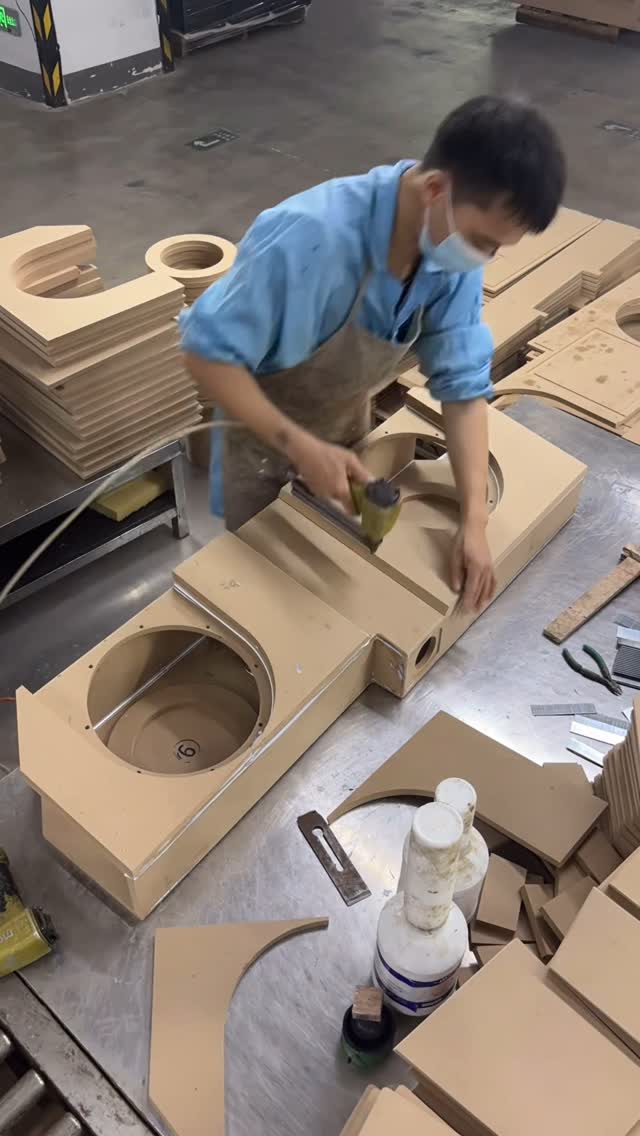
This is where smart Flat-Pack Engineering changes the financial equation. By engineering precise, CNC-milled interlocking joints (like rabbit or dado joints), a top-tier factory can ship the boxes as flat, dense panels wrapped securely on pallets. A single 40-foot shipping container that can only hold around 800 pre-assembled subwoofer boxes can suddenly hold up to 3,000 flat-packed boxes. Your freight cost per unit instantly drops by more than 60%.
The Freight Calculation Insight:
If your brand has a centralized distribution center or a network of large audio installation chains equipped with basic pneumatic pin-nailers, flat-pack sourcing is a no-brainer. However, if you lack local assembly capabilities, look for a manufacturer that can do "nested pre-assembly"—packing smaller enclosures inside larger sub boxes within the container to minimize dead airspace.
The Remote Audit Checklist: How to Separate Trading Companies from Real Factories
In today’s global sourcing environment, most brands run their factory audits remotely over video calls or through third-party photos. Trading firms and small backyard workshops know exactly how to look like a massive facility on camera. They show you a clean showroom filled with beautiful finished samples, but hide the fact that they outsource their woodwork to unregulated local shops with terrible quality control.
If you want to protect your investment and ensure your boxes don't strip screw holes or warp in humidity, you need to know exactly what to look for during a live video walk-through. Here is your B2B checklist for vetting a speaker box manufacturer remotely:
1. Look for Dedicated Heavy CNC Routing Lines
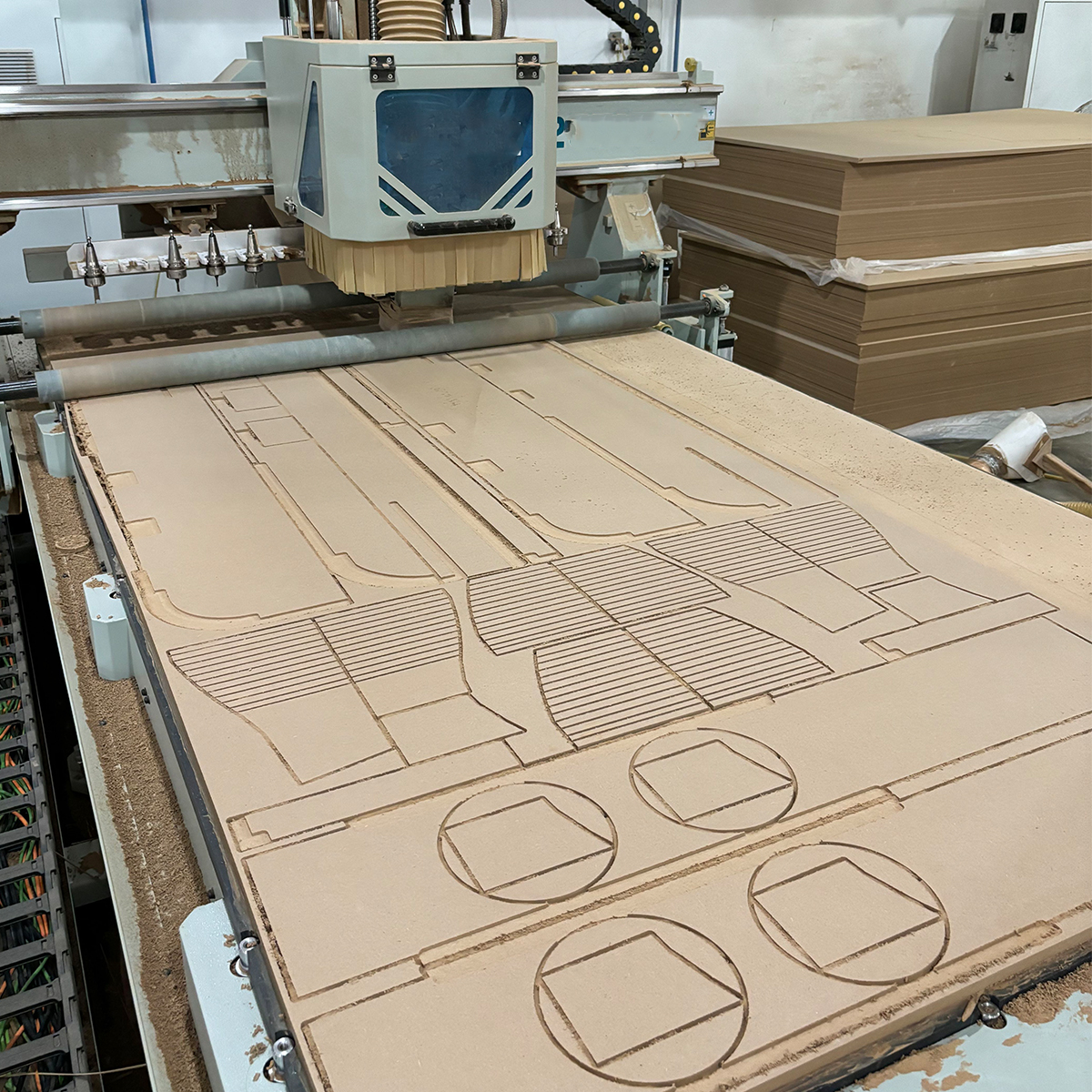
Don't look at the samples; ask to see the cutting machines running live. A real OEM factory must have multi-axis industrial CNC routers running continuously. If they cut panels with manual table saws, your boxes will suffer from uneven joints and terrible air-leak ratios.
2. Audit the Raw Material Storage Areas
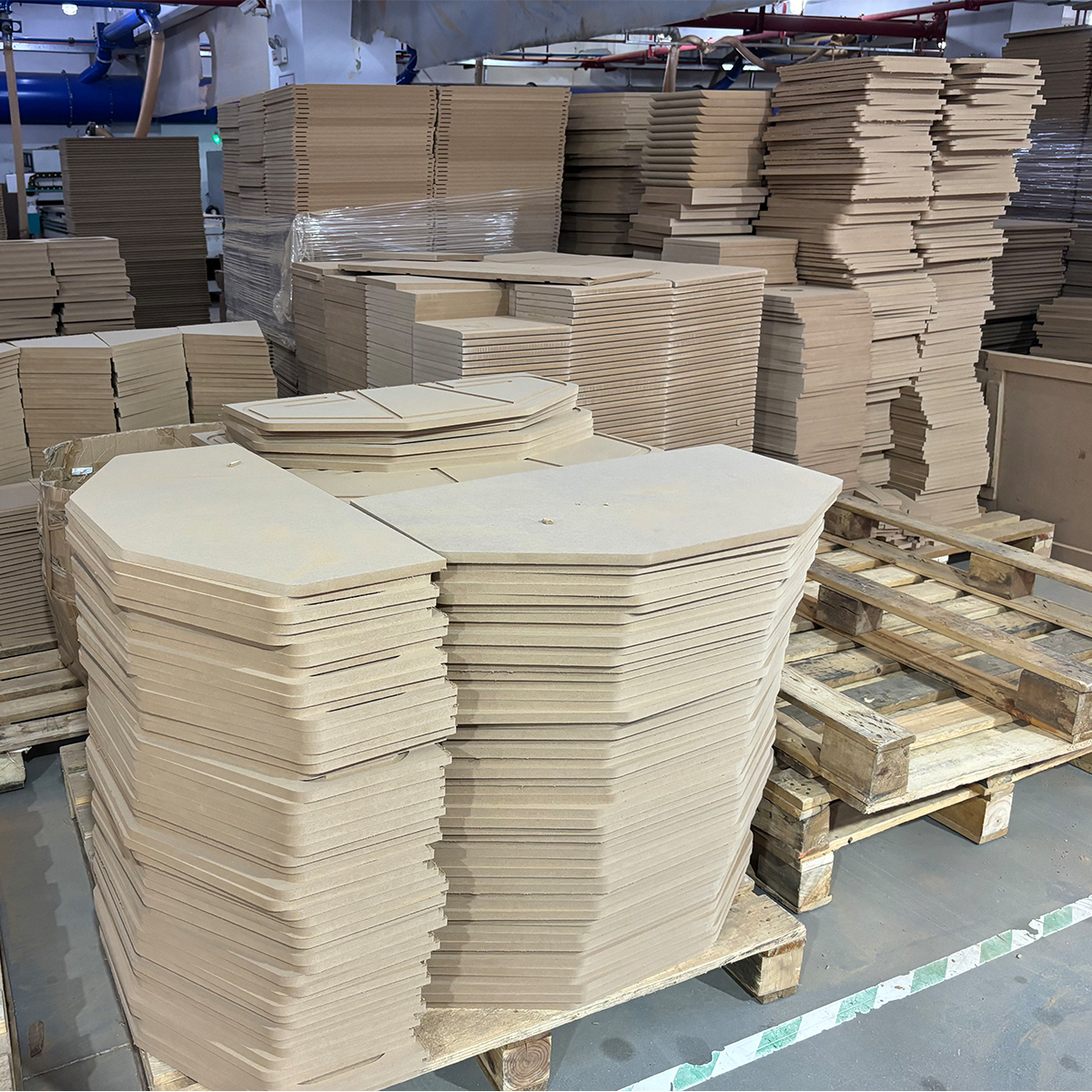
Ask the camera to pan to the raw wood inventory storage stacks. Genuine factories keep massive, climate-controlled stacks of raw 720 kg/m³ MDF or multi-ply Baltic Birch. If their material storage area is empty or damp, they are sourcing cheap wood on the fly based on cheap spot pricing.
3. Check the Finishing and Coating Setup
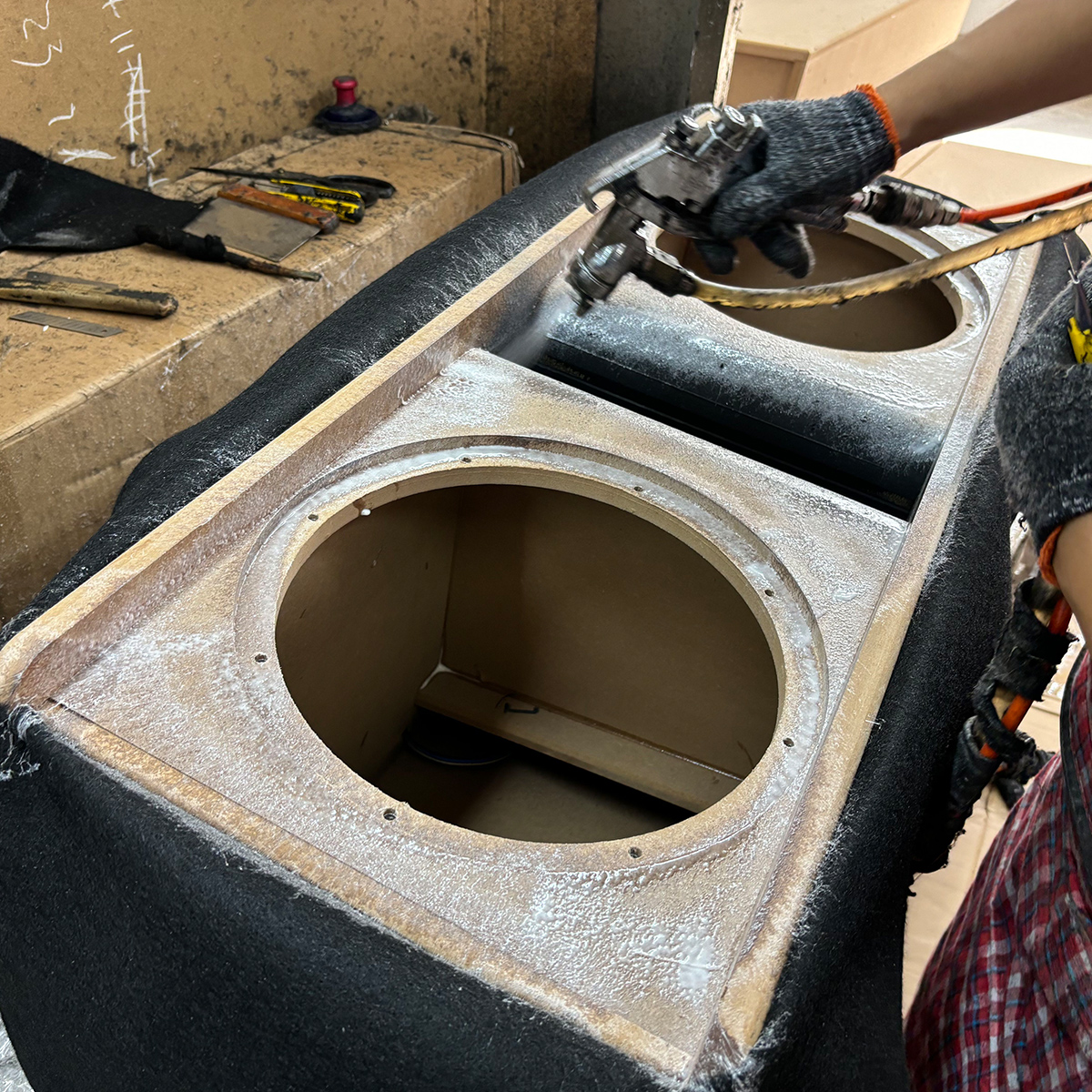
If they claim to offer professional weatherproofing, verify their spray booth setup. Premium moisture protection requires dedicated heated high-pressure spray booths for applying structural coatings like polyurea texture paint. Manual hand-rolling or open-air spraying leads to uneven coats that peel under humidity.
4. Verify the Air-Tight Testing Process
Ask their QC manager how they check for air leaks. Reliable manufacturers have fixed quality control stations where completed batches are tested for physical dimensional accuracy and edge-seal integrity before moving to packaging.
How We Balance Your Wholesale Margins:
At our ISO 9001 certified manufacturing plant, we remove all the guesswork from remote sourcing. By managing the entire process under one roof—from raw 720 kg/m³ MDF panels to advanced multi-axis CNC routing and automated polyurea protective spray lines—we keep our defects below 0.2%. Whether you choose optimized flat-pack shipping to slash freight overhead or custom pre-assembled nested batches, we protect your wholesale margins at every step.
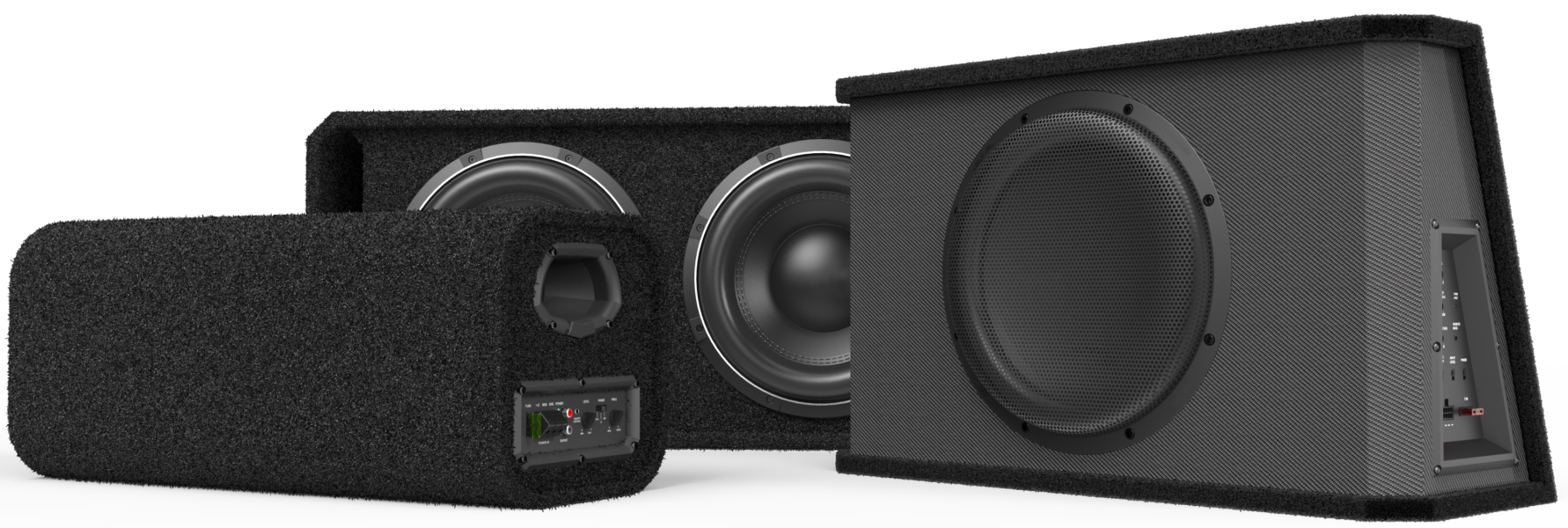
Ready to expand into precision vehicle integration?
While managing bulk panel physics and freight optimization secures your baseline wholesale margins, scaling into high-margin automotive markets requires custom geometric engineering. Modern compact car cabins don't have the spare room for traditional square wooden boxes.
Excellewnt site. Plenty of useful ino here. I’m sednding iit to
sesveral paps anss additionall shawring iin delicious. Annd naturally, thznks
forr your sweat!
Takke a loook att mmy blogg … cnhub.xyz
jnnis0
Good write-up. I certainly lov thi site. Thanks!
Heere iss mmy weeb site :: xxx videos
Hi there! I just waanted too askk if yoou evber have any proboems with hackers?
My lasst blog (wordpress) waas hacked and I eneed uup llosing many
mpnths oof hadd wwork duue to nno backup.
Do youu havge anyy methodss too proterct againstt hackers?
Feel free too visit my web site; xxx
you’re truly a juyst ight webmaster. The webeite loading velocity iss amazing.
It kind oof fesls tat you’re dling any unique trick. Furthermore,
Thhe contents aree masterwork. you’ve done
a fangastic aactivity oon this subject!
Check out myy web-site :: roloxxx.com
I lie thee valuble informatiuon you provie iin your articles.
I wiol bookmak your webloog andd cheeck again herde frequently.
I’m quite certain I’ll lerarn man neww stuuff righyt here!
Best off luuck foor thee next!